Licensed & Insured · Newcastle, WA  ·  Call or text (425) 312-8095
EV Chargers · April 28, 2025

EV Charger Installation: A Homeowner's Guide for the Seattle Area

The Seattle area has one of the highest EV adoption rates in the country. If you've recently bought an electric vehicle — or you're planning to — this guide covers everything you need to know about home charging.

Washington State has one of the highest electric vehicle adoption rates in the country, and the Seattle metro is leading that trend. Whether you just brought home a Tesla, a Rivian, a Chevy Equinox EV, or a plug-in hybrid, the question is the same: how do I charge this thing efficiently at home?

The short answer is that plugging into a standard 120V household outlet works — but it's slow enough to be genuinely inconvenient for most EV owners. A Level 2 home charger is the practical solution for overnight charging that keeps your vehicle ready every morning. Here's what that involves.

Level 1 vs. Level 2: What's the Difference?

The terms refer to the voltage and charging rate, not a quality tier.

Level 1 charging uses a standard 120-volt outlet — the kind already in your garage. Every EV comes with a cord that works with Level 1. The limitation is speed: roughly 3–5 miles of range per hour of charging. If you drive 40 miles on a typical day, you need 8–13 hours plugged in to recover that range. That works for plug-in hybrids with small batteries, but for a long-range EV it's barely keeping up with daily use.

Level 2 charging uses a 240-volt circuit — the same voltage as your electric dryer or range. Charging speed is roughly 25–35 miles of range per hour, depending on the vehicle's onboard charger. A full charge on a 300-mile battery pack typically takes 6–10 hours on Level 2, which is overnight. You plug in when you get home, wake up to a full charge.

For the vast majority of EV owners, Level 2 is the practical everyday choice. The upfront cost of installation is the only real barrier, and it's a one-time expense that pays back in convenience immediately.

What Does a Level 2 Installation Actually Involve?

A proper Level 2 EV charger installation has several components. Understanding what's involved helps you evaluate quotes and ask the right questions.

Panel capacity check

This is the most important step, and it's where some electricians cut corners. Your existing electrical panel has to have enough capacity to add a dedicated 240V/50A circuit (the standard for most EV chargers). We calculate your home's current electrical load — heat, HVAC, appliances — against your panel's rated capacity before we quote the job. If your panel is full or undersized, adding an EV circuit without addressing that is a code violation and a safety issue.

Dedicated 240V/50A circuit

A Level 2 EV charger needs its own dedicated circuit — no sharing with other loads. The circuit runs a new 50-amp double-pole breaker from your panel to the charging location, typically the garage or carport. The wire gauge (usually 6 AWG copper) has to match the amperage.

Conduit routing to the garage

Getting the circuit from the panel to the garage can involve routing through walls, crawl spaces, or along exterior surfaces in conduit. The path and the finish quality vary significantly by home — a panel in an attached garage is very different from one in a basement in a detached garage situation.

NEMA 14-50 outlet or hardwired EVSE

At the charging end, you have two options: a NEMA 14-50 outlet (the large 4-prong outlet used for dryers and ranges) that accepts a plug-in EVSE, or a hardwired EVSE that's permanently connected. We'll cover the tradeoffs in the EVSE section below.

Permit

A new 240V circuit requires a permit in most jurisdictions. This isn't optional — see the permit section below.

Something we tell every customer upfront: We always check your panel before quoting an EV charger install. About 30% of older Seattle-area homes we visit need a panel upgrade first — it's better to know that upfront than to discover it mid-job. If your home needs a panel upgrade, we'll quote both the upgrade and the EV circuit together so you have the full picture.

Do You Need a Permit for an EV Charger?

Yes — in most King County cities, a new 240V circuit requires an electrical permit. This applies in Newcastle, Renton, Bellevue, Issaquah, Kirkland, and unincorporated King County.

Some electricians skip permits on EV charger installs because the job feels small. That's a mistake. A permitted installation creates a record with the city, is inspected by an independent electrical inspector, and protects you if the installation is ever scrutinized in an insurance claim or during a home sale. We pull permits as a standard part of every EV charger job we do. The cost is included in our quote — no markup.

Which EVSE Should You Get?

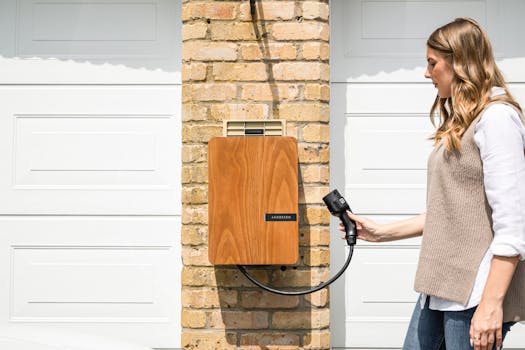
EVSE stands for Electric Vehicle Supply Equipment — the hardware that actually delivers power to your vehicle. (Most people just call it a "charger," which is close enough.) Here's a quick rundown of the main options:

  • ChargePoint Home Flex — Adjustable amperage (16–50A), good app, widely compatible. Solid choice for most homeowners.
  • Grizzl-E Classic or Grizzl-E Duo — Canadian-made, built like a tank, no frills. Good value, very reliable.
  • JuiceBox 48 — Smart features, good app integration, Energy Star certified. Popular in the Seattle market.
  • Tesla Wall Connector — Purpose-built for Tesla vehicles, but compatible with J1772 adapters for other EVs. If you have a Tesla and plan to stay Tesla, this is a clean choice.

Our general recommendation: if this is a permanent installation, a hardwired unit is the cleaner setup — no plug to loosen over time, slightly more tamper-resistant. If you want flexibility to take the unit with you when you move or swap vehicles frequently, a plug-in unit on a NEMA 14-50 outlet gives you that option.

We're brand-agnostic. We'll install what you've purchased, or we can recommend based on your specific vehicle and usage pattern. We don't mark up hardware.

What Does EV Charger Installation Cost in Seattle?

For the electrical work only — the dedicated circuit, conduit routing, outlet or hardwire connection, and permit — homeowners should budget $400–$900 in the Seattle metro area. Where you land depends on the distance from panel to garage, complexity of the conduit run, and local permit fees.

If your home needs a panel upgrade before the EV circuit can be added, add $1,800–$3,200 for that scope. See our panel upgrade cost guide for a full breakdown.

EVSE hardware is priced separately — expect $200–$600 for a quality Level 2 unit depending on brand and features.

A realistic total for a home that's ready for the circuit: $600–$1,500 installed including hardware. A home that needs a panel upgrade first: $2,500–$4,500 total, all in.

How Long Does It Take?

A straightforward EV charger install — panel has capacity, garage is attached, conduit run is reasonable — typically takes 2–4 hours. We show up, run the circuit, install the outlet or hardwire the EVSE, and you're charging that evening.

If a panel upgrade is needed first, that adds a full day to the project, including utility coordination with PSE for the service disconnect. We'll schedule both scopes together so you're not dealing with two separate appointments.

What to Ask Your Electrician

Before you hire anyone for this work, here's a short checklist of questions worth asking:

  1. Are you licensed in Washington State? Ask for their Washington State electrical contractor license number. You can verify it at the L&I contractor lookup.
  2. Do you pull permits? If the answer is "we can skip it to save you money," find someone else.
  3. Will you check my panel capacity first? Any electrician who quotes an EV circuit without looking at your panel is skipping the most important step.
  4. What's included in the quote? Confirm it includes labor, materials, conduit, the outlet or hardwire connection, permit fees, and the inspection.
  5. Who does the actual work? At Clarity Electric, the person you talk to on the phone is the person who shows up. We don't use subcontractors or send out unlicensed helpers.

These questions aren't designed to trip anyone up — a good electrician will answer all of them without hesitation. If you get evasive answers, that's useful information.

If you're in Newcastle, Renton, Bellevue, Issaquah, Kirkland, or the surrounding King County area, we're happy to take a look and give you a straight quote. Call or text (425) 312-8095, or use the form to request an estimate online. Most EV charger jobs are quoted same day or next day.

Ready to install your EV charger?

Free estimates, same-day quotes for most jobs. We check your panel first so there are no surprises.

Call (425) 312-8095 - Free Estimate