What Electrical Service Do You Need for EV Charger Installation?
Complete breakdown of circuit amperage, panel capacity, and wire gauge requirements for home electric vehicle charging.

Complete breakdown of circuit amperage, panel capacity, and wire gauge requirements for home electric vehicle charging.
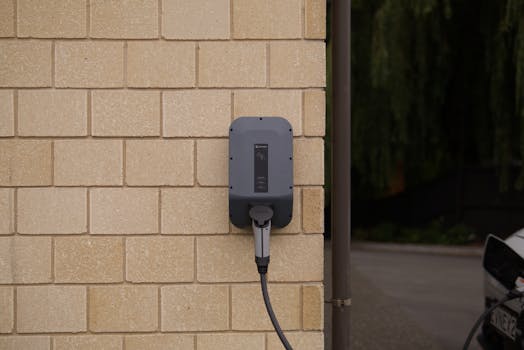
Before you can install an EV charger at your Newcastle or Seattle-area home, your electrician needs to confirm your electrical service can handle it. Unlike plugging a regular appliance into an outlet, EV charger installation requires a dedicated high-capacity circuit. Getting the electrical requirements right is critical for safety, performance, and code compliance.
This guide breaks down exactly what electrical service your home needs for Level 2 EV charger installation.
An EV charger's electrical requirements come down to three components:
The charger's power draw in amps. Most Level 2 chargers draw between 30-50 amps depending on the model. Some older or lower-power models draw 16 or 20 amps.
Common charger amperages:
The thickness of the electrical wire running to the charger. Thicker wire carries more current safely. Undersized wire is a fire hazard. The gauge depends on the circuit amperage and distance from the panel.
Wire gauge requirements for EV chargers:
Note: These are minimums. If your garage is far from the electrical panel, your electrician may spec heavier gauge wire to prevent voltage drop.
The circuit breaker that protects the charger circuit. The breaker must match the wire gauge and be sized for the intended circuit amperage.
Oversizing a breaker or undersizing wire is dangerous and against code. A proper installation matches the breaker, wire, and charger amperage exactly. That's what a licensed electrician ensures.
- Washington State Electrical Code
Beyond the individual charger circuit, your overall home electrical service must handle the load.
Why the difference? Your electrical panel has a main breaker that limits total household current. A 100 amp service can theoretically support a 30 amp charger, but if your home also has a heat pump, electric oven, or air conditioning running simultaneously, you might overload the panel. A 200 amp service provides comfortable safety margin.
Even with 200 amp service, your electrical panel might not have an available 50-60 amp breaker slot. Modern panels are often fully loaded with breakers for existing circuits.
Your electrician will check:
If your panel is full, you may need to consolidate circuits, add a subpanel, or upgrade to a larger main panel. This adds cost but ensures safe operation.
How far is your garage from the electrical panel? This matters more than many homeowners realize.
Electricity loses power over distance. The longer the wire run, the more voltage drops. For EV chargers, this can reduce charging speed. To compensate, electricians use heavier gauge wire for longer runs.
| Charger Amperage | 0-25 feet | 25-50 feet | 50-100 feet |
|---|---|---|---|
| 30 amps | 10 AWG | 8 AWG | 6 AWG |
| 40 amps | 8 AWG | 6 AWG | 4 AWG |
| 50 amps | 6 AWG | 4 AWG | 2 AWG |
Heavier gauge wire costs more. A garage 50+ feet from the panel can add $300-$800 to installation cost compared to a nearby garage.
Let's walk through an actual assessment Clarity Electric performed:
Home Details:
Electrician's Assessment:
Result: Installation approved, cost estimate $1,200.
Don't worry. If your home's electrical service can't support a 50 amp charger, you have options:
A 30 amp charger still charges most vehicles overnight (~25 miles/hour). You can upgrade later if needed.
Many older Newcastle homes have 100 amp service designed decades ago. A 200 amp panel upgrade costs $2,500-$4,500 but opens possibilities for EV chargers, heat pumps, and future expansion.
A subpanel allows you to split electrical load without replacing the main panel. This is sometimes cheaper than a full upgrade, depending on your situation.
Many Newcastle homeowners are surprised to learn that upgrading their panel opens more possibilities than just EV charging. It also enables heat pumps, electric appliances, and adds home value.
- Clarity Electric LLC
Before your electrician begins work, they should verify:
Not sure if your home is ready for an EV charger? We'll perform a free electrical assessment including:
Call 425-210-4791 or request a free quote. We serve Newcastle, Renton, Bellevue, Issaquah, and all of King County.
Don't guess about electrical safety. Get a professional assessment and start charging at home with confidence.